Reinterpreting Campus Identity: The UT Austin Engineering Discovery Building Facade
By Emilio Todescato and Esther Chao
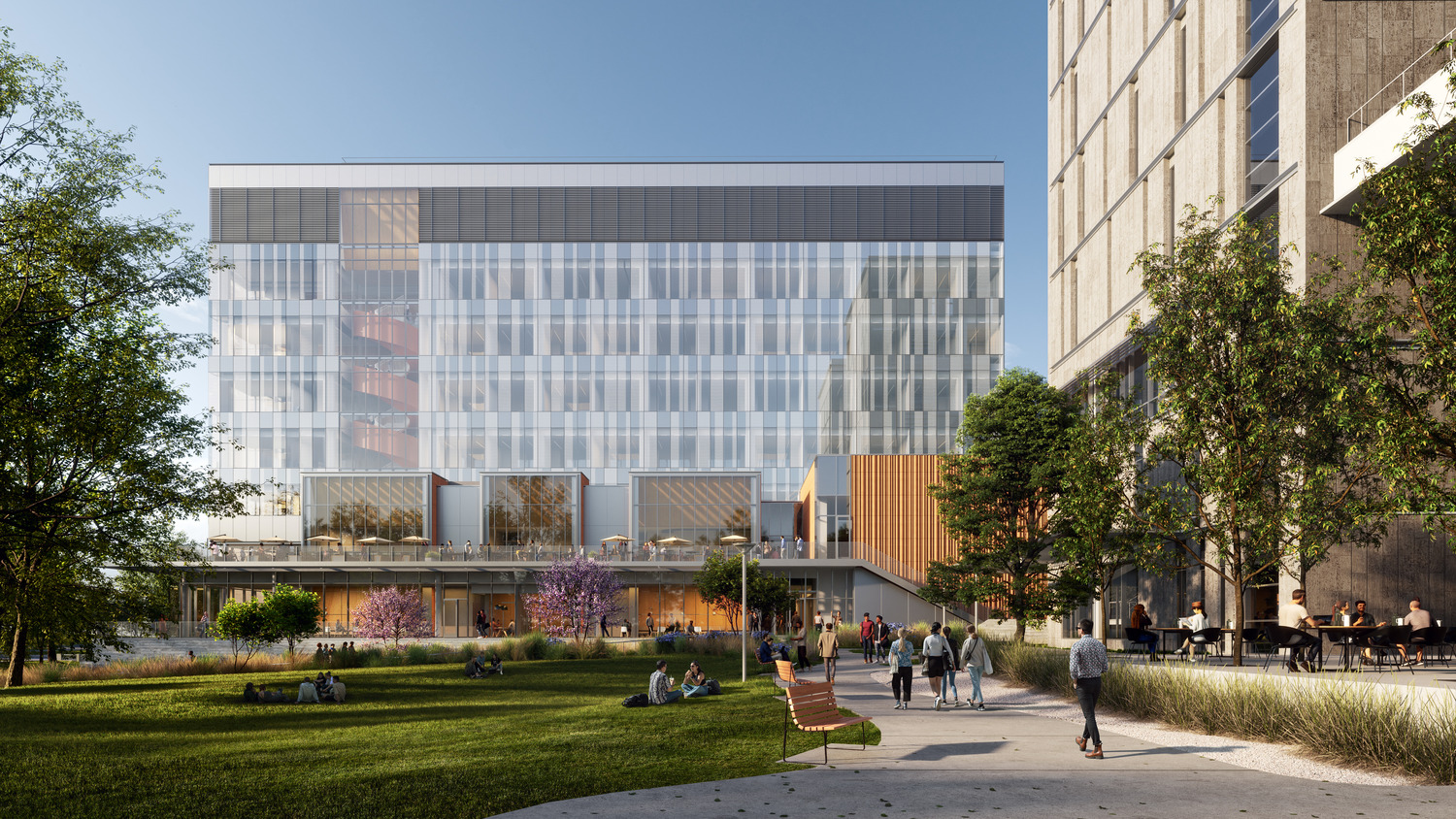
The Engineering Discovery Building (EDB) facade reinterprets the University of Texas at Austin’s historic architecture through a modern lens. Positioned at a key corner, the 210,000-gsf EDB is designed as a gateway to the campus and serves as a threshold between the old and new campus zones. It extends the engineering quad as a laboratory bar, linking to adjacent buildings visually with its facade expression and with a pedestrian bridge, reinforcing its role as both connector and destination.


The facade design process began by exploring context and materiality with the goals of continuity and ingenuity. At the UT Austin, limestone plinths, terracotta roof tiles and signature burnt-orange brick characterized the campus’s traditional architectural identity. At the same time, the engineering precinct located adjacent to EDB is defined by modern materials such as metal and glass. In response, the design team selected five primary materials for the EDB: limestone, brick, terracotta, metal and glass to unify the campus tradition with the modern engineering wing.
The facade is designed to unite the various materials through three critical lenses: datum, palette and detail. Strong horizontal datums connect the building across its varied materials. Rather than aligning strictly with floor levels, these lines are strategically elevated, most notably on the south elevation, and then carried across all facades. The Texas limestone intentionally has routed reveals to emphasize the building datums. The patterning of the racking brick facade is inclusive of the strong lines, as well as the frit of the glazing on the north facade. The result is a continuous visual thread that keeps the building reading as a single composition.

Materiality overlap


EDB connects with the materials of adjacent existing buildings.

Particular attention was given to the coloration of the materials and to create a balanced palette. This is exemplary in the team’s rigor and treatment of the “terracotta pavilions” on the north facade. Achieving the right hue required extensive iteration; early explorations of “Texas orange” proved too bright once glazed. Instead of an emphasis on the glaze color, the team explored a method of applying a clear glaze over the clay’s through-body to achieve a rich and natural look. This required multiple iterations of the manufacturer’s clay mix and additives. The balance of the warm tones of the terracotta and brick with the cool metal and glass complement each other, achieving a dynamic but balanced contrast. Close collaboration with Boston Valley Terracotta ultimately produced a tone that maintains warmth and depth without becoming overly dark.
This terracotta facade became a key unifying element, with its curved geometry echoing in the east facade’s vertical aluminum fins, top canopy and exterior trellis. The fluted terracotta is also carried through the interior at strategic locations.


CO pioneered new methods of detail and form across the various materials in the façade to draw connections and innovations. On the south facade, brickwork gradually racks forward and eastward to create unique shadows throughout the day. The pattern subtly mimics the proportions and shadow lines of the curtainwall systems on the north facade, creating cohesion through pattern rather than repetition. The fluted terracotta on the west facade was a custom extrusion that draws inspiration from the cylindrical geometry of engineering drilling cores and the campus’s clay roof tiles. CO utilized 3D printing to mockup different extrusion forms. Performance and aesthetics merge on the east facade, where angled fins respond to harsh morning sun while reinforcing the terracotta curved form. Lastly, the north facade curtain wall has a custom frit pattern that gives it a more solid reading with patterning to match the adjacent building in the same limestone coloration while reducing the solar heat gain.


The EDB facade succeeds in establishing a new gateway by weaving its contextual elements into a unified whole. Through aligned datums, a carefully calibrated palette, and shared geometries, the building will become a landmark that honors UT Austin’s past while embodying its future.

